
In an earlier post, I wrote about how the distinctive subgenus Lindrochthus, viewed in the literature as consisting of the single species Bembidion wickhami, was actually at least two species. And those two species live together at Mount Tamalpais, just north of San Francisco; Peter Hammond collected them at a single site on Barths Creek on “Mt Tam”.
In early September Dave Kavanaugh and I went to Mt Tam, and looked for Lindrochthus along the banks of Cataract Creek and Barths Creek. We knew the exact localities where Peter Hammond and Kip Will had collected the beetles I had previously sequenced, and we went to those spots. We couldn’t find the beetles there. Mind you, it is very dry in September (the winter rains had not yet started), and so we thought that perhaps the beetles were in hiding. But we had hope that in the moister, more humid areas near the creek we could find them. We looked in perhaps 20 or so places, and found them in only one small patch.
This patch was only about 2 square meters, and consisted mostly of a moss-covered small cliff face, about 3 meters from the water of Cataract Creek. The area with beetles is outlined in yellow on the image below, and extended a small bit to the right, outside the view of the photograph.
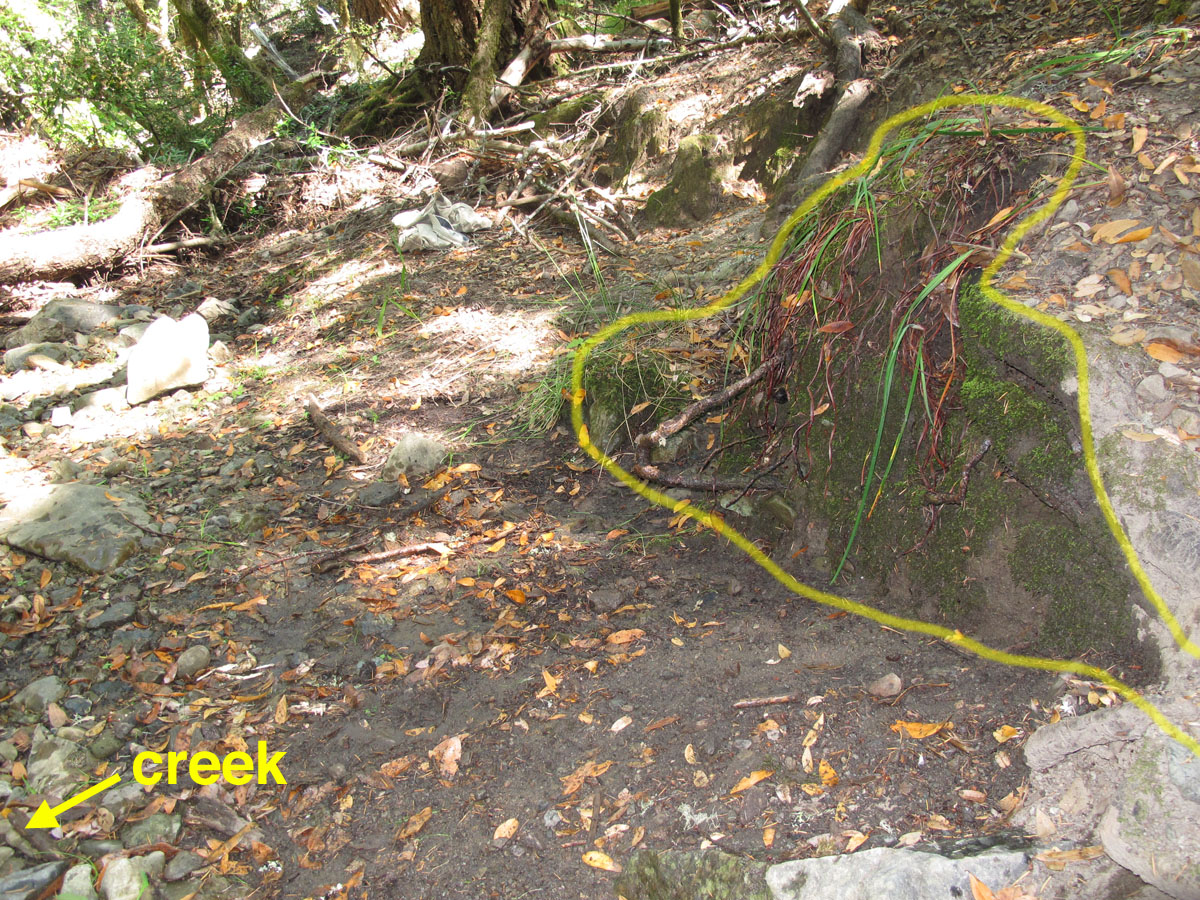
We got a total of 31 specimens of Bembidion subgenus Lindrochthus, all by dumping buckets of water on that patch. The beetles appeared after the water wet the moss and soil. In addition to the Lindrochthus, some Bembidion iridescens lived there.
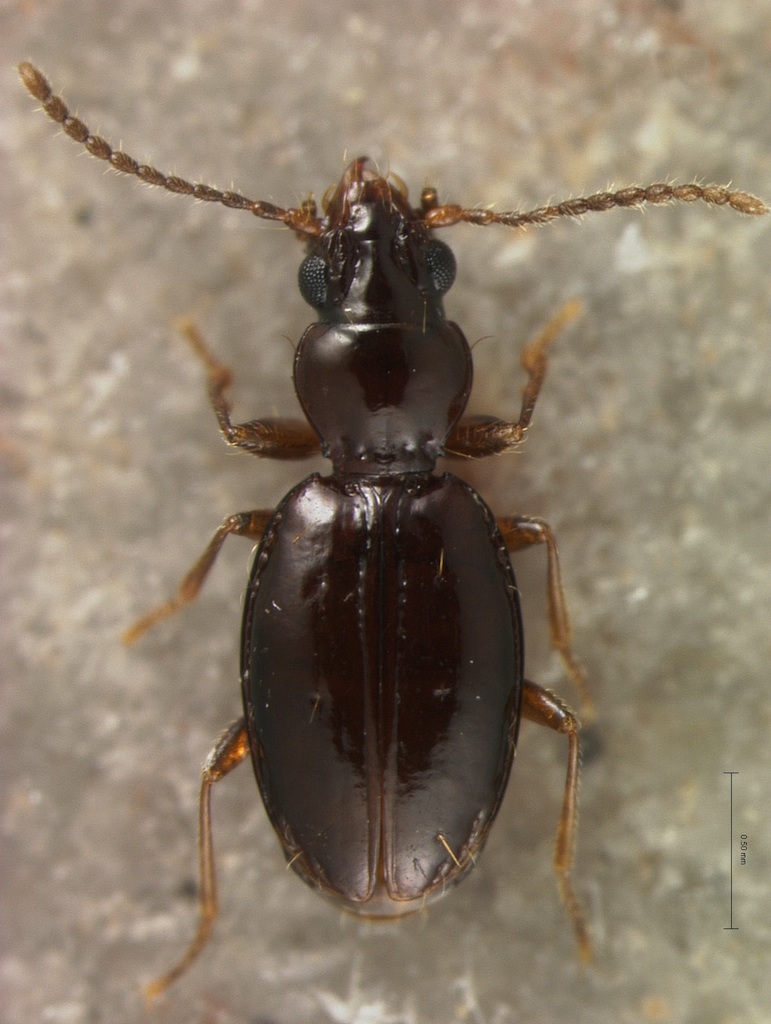
Here’s one of the beetles from that patch:

We were hoping that our 31 specimens would be a mixture of both species of Lindrochthus known from Mt Tam, but I wouldn’t find out until I got back, sequenced seven, and looked at all of them more carefully. These new specimens also gave me enough material to enable me to find definitive morphological characters to tell the species apart. As it turned out, they are easier to distinguish than I expected.











 David Maddison
 The Subulate Palpomere