
We had our first week in the Discovering Insect Species course (see this post for an introduction to the course), and it was a good start.
Tuesday
Tuesday’s session was a gentle introduction species delimitation. I wanted to get the students thinking about the sorts of data that are used to delimit species, and to try it out in some examples. This is a “full immersion” class, and so a lot of the context and background will come in the midst of our experiences, and not explained up front. For example, we didn’t at all talk about what we mean by “species”, and instead just dove right in to experiencing properties of species. (We will have an explicit discussion of the meaning of “species” later.)
After we took care of the administrative details, we gave half the students 14 laminated, numbered cards, each of which had a picture of a tamarin, and other half 13 cards with different tamarin pictures. Here’s what the full set looked like:

Each group’s task was to group the specimens depicted in the photographs into species. Here’s one group discussing the visual evidence provided by the photographs, evidence that might allow them to group the specimens into species.
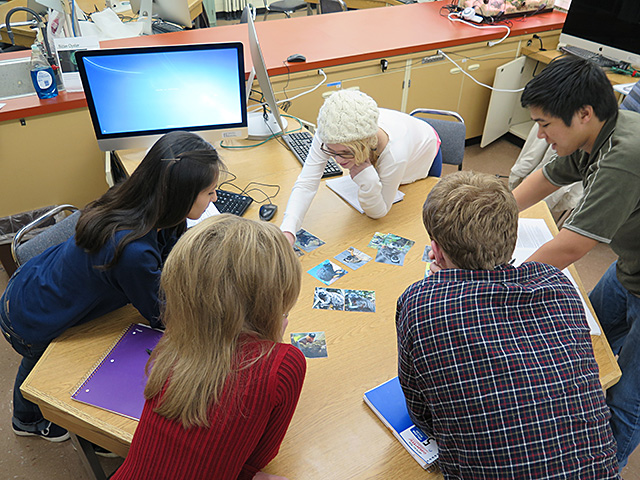
Once each group was done, the two groups got together, and discussed how they might merge their proposed species. Once they had come up with proposed groupings, we talked about the evidence they used, and what evidence they might ideally have to make the decisions. I then revealed how the specimens they examined are viewed by biologists. The class’s results exactly matched those of biologists.
I then talked a little bit about the taxonomic history of the tamarin species they sorted. The earliest species to be described was Sanguinus midas, which was originally described by Linnaeus (1758) as Simia midas. I showed the class the original description:
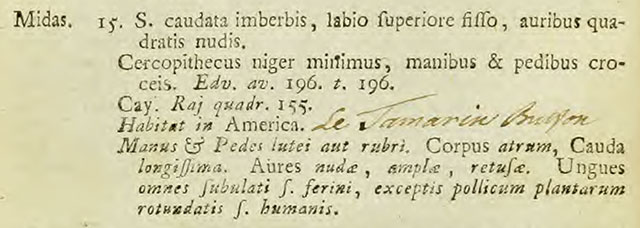
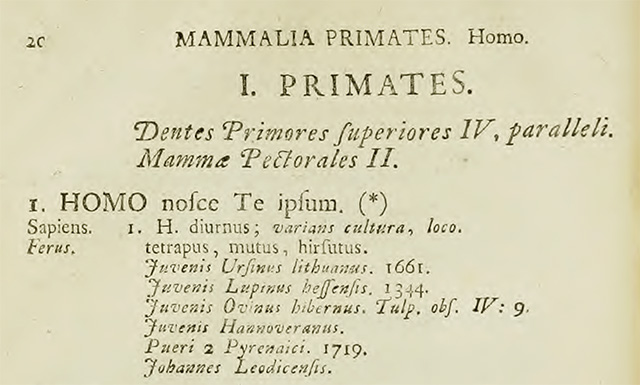
I told them how Linnaeus’s 1758 work was the starting point of zoological nomenclature, and the species names proposed there represent the first animal species to be described using modern names (with the exception of the spider names in Clerck 1757). I showed them the very first species to be described in Linnaeus 1758, with the simple description “Know Thyself”:
We then switched over to carabids. After I introduced the class to carabids in general and Bembidion in particular, we did a similar card-based exercise with Bembidion subgenus Liocosmius. This is a subgenus that I revised recently with Ken Cooper. The cards for these specimens each had a photograph of the beetle, as well as a picture of the genitalia (all photographed specimens were males), and the voucher number:

The class attempted to reached a consensus about the species represented among the cards, but the species boundaries weren’t nearly as obvious as it was for the tamarins. I asked if they would like any more data for the specimens, and it was eventually decided that clearer views of the genitalic structures would help. So I then gave them accessory cards with better views of the internal structures:
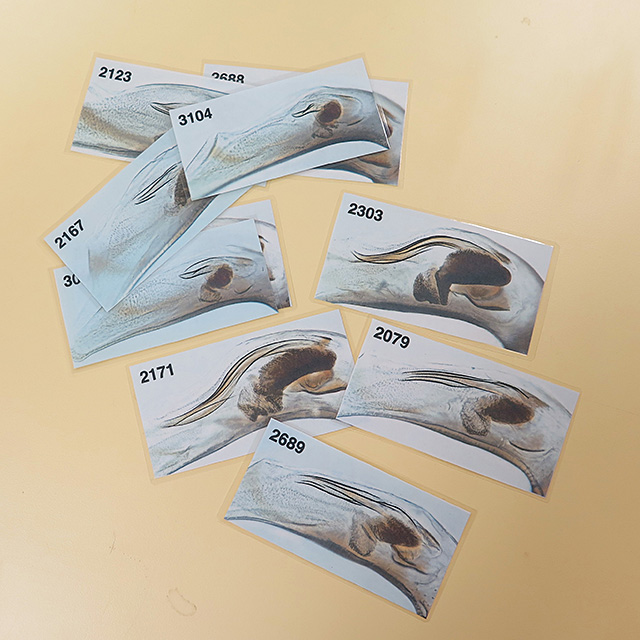
This definitely helped, and they were able to make more progress.
I then gave them more data in the form of images of gene trees of four genes. Here’s what the tree of COI looked like:

They matched the voucher numbers one the cards with those in the trees, and looked at the correlations between the tree shape and the morphological characters. We talked for quite a while about the meaning of the tree diagram and the nature of gene trees.

After they had looked at all four gene trees, and the cards again, I showed them the four gene trees again, this time labelled to reveal the conclusions I came to in my 2014 study of the group.
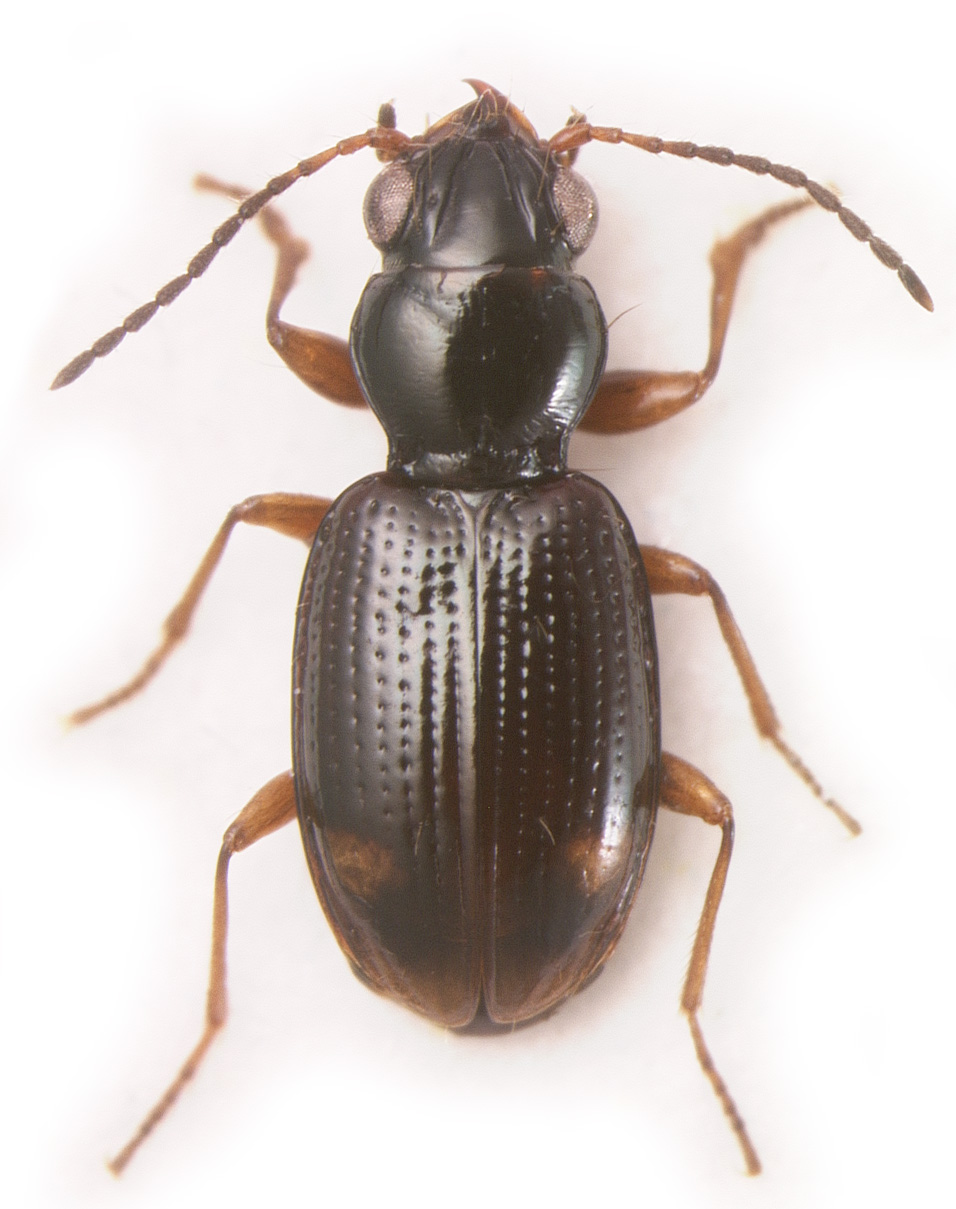
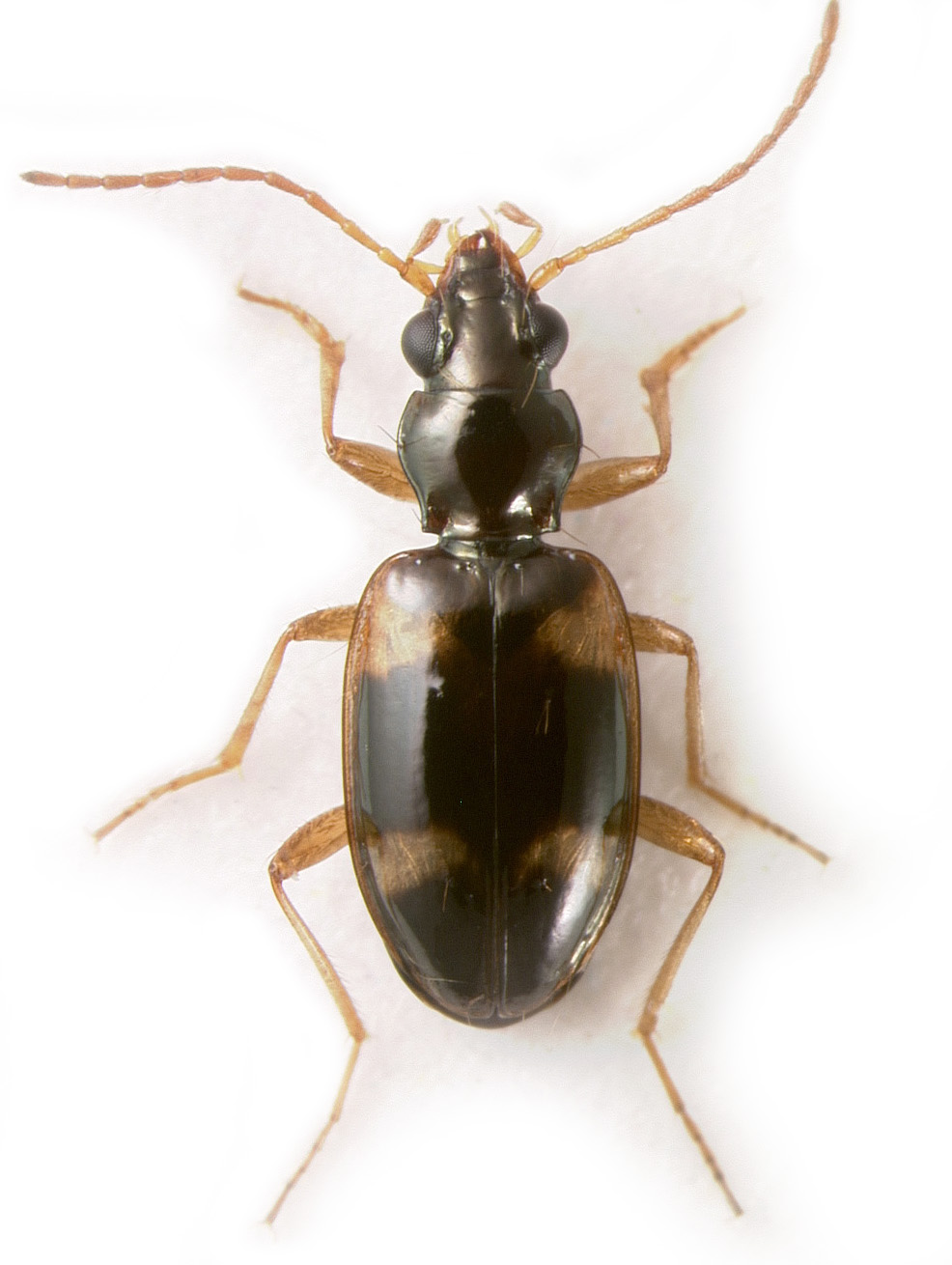
We ended this session by looking a specimens of Bembidion (Trepanedoris) under the microscope. We also looked at other species of Bembidion that we would likely see on our field trip on Thursday, in particular Bembidion (Eupetedromus) incrematum and B. (Furcacampa) timidum.
The session included a lot of concepts, but I think it was a good start to this immersive experience.
Thursday
The class Thursday afternoon was all about seeing the beetles we will be researching, Bembidion subgenus Trepanedoris, in the field. We went to some wilder lands near the Willamette River in Corvallis, and managed to find quite a few Trepanedoris. We will find out next Tuesday exactly what we found, but at first glance it looks as if we found three species of Trepanedoris.

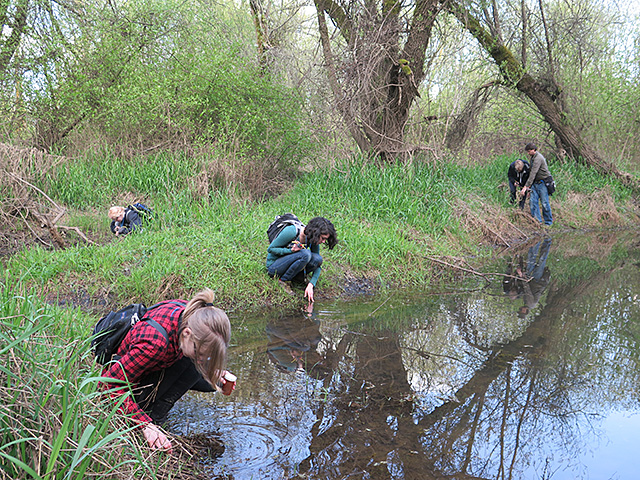
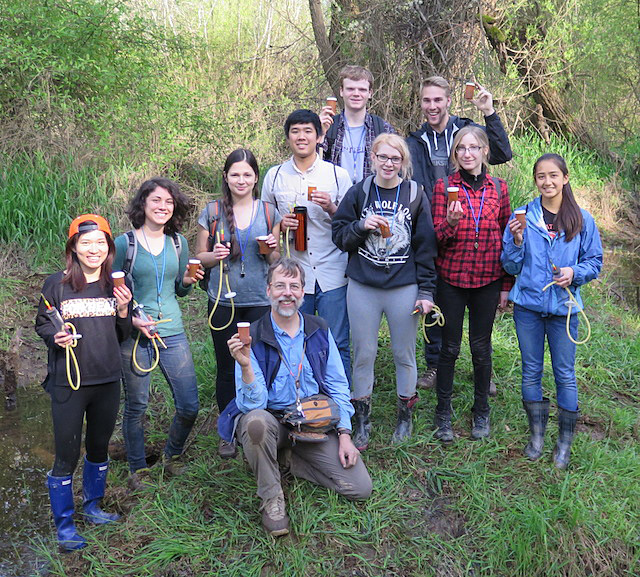
We had an excellent time, and all managed to do a great job sucking up the little beetles. Here we are (except for my grad student John, who is the photographer) proudly holding up our catches.









 David Maddison
 The Subulate Palpomere