Two lineages, not one

I’m back, after a long hiatus.  We’ve been busy in the lab looking at the specimens from the Big Loop Trip, and sequencing them.  Over the next few weeks I will report on some of the results.  We’ve discovered some additional new species since I last wrote, and have learned a lot about the species in the southwest.

I’ll begin with a follow-up to my post pondering whether or not two species we discovered (one from the Red River in northern New Mexico, the other from mini talus slopes along Coal Creek in southern Utah) formed a previously undiscovered lineage of Ocydromus Complex species that live in cryptic habitats.

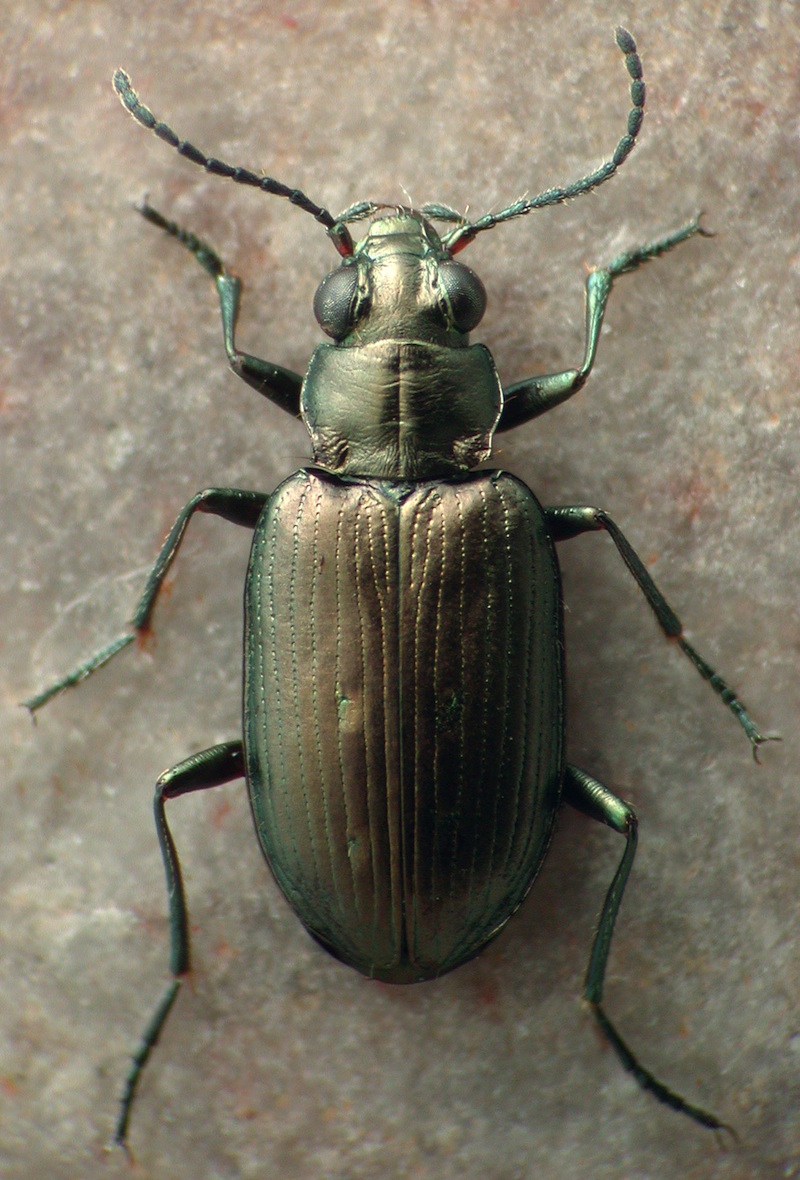
After I wrote that post, I made genitalic preparations of the single known specimen of the Red River species, and one of the talus species.  On seeing the male genitalia of the Red River species I was reminded of the genitalia of Bembidion rupicola, a widespread species  in North America that is related to Old World species in the subgenus Peryphus.  Here’s what B. rupicola looks like:

Bembidion rupicola

Bembidion rupicola

It doesn’t look all that close to the Red River species; here is the Red River species for comparison:
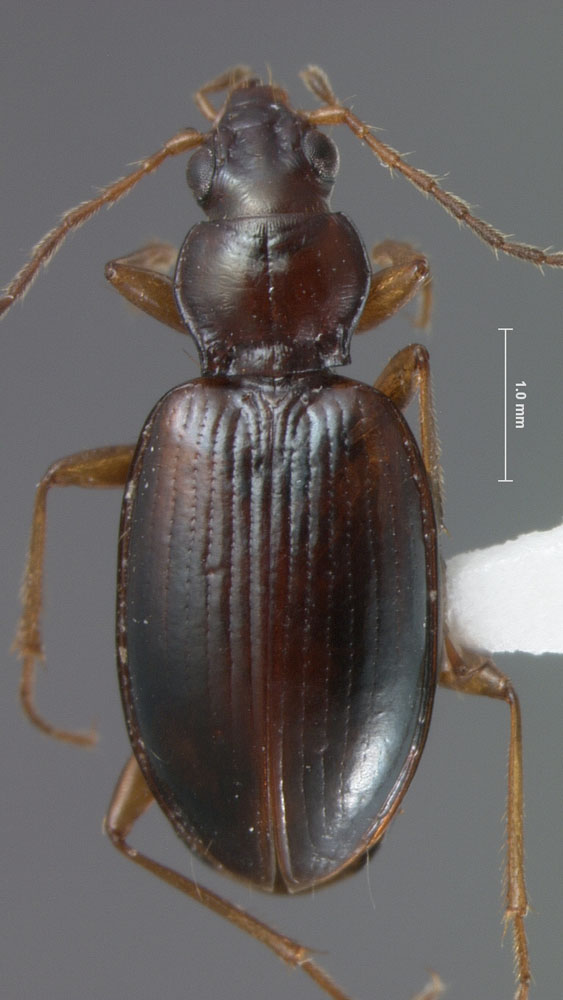
An undescribed species of the Ocydromus complex of Bembidion

An undescribed species of the Ocydromus complex of Bembidion

But the male genitalia are rather similar:
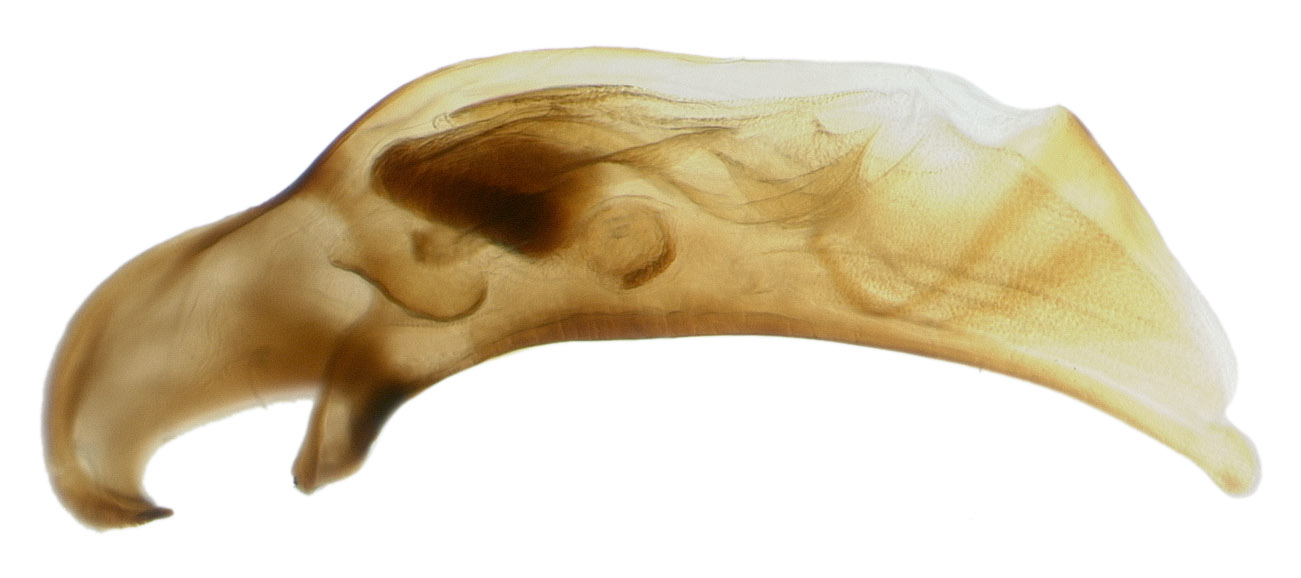
Male genitalia of Red River species

Male genitalia of Red River species

Male genitalia of Bembidion rupicola

Male genitalia of Bembidion rupicola

The male genitalia of the talus species, however, looks rather different, and gave me doubts about whether the Red River and talus species were related:

Male genitalia of talus species

Male genitalia of talus species

Our initial (and preliminary) DNA results confirm that the Red River and talus species are not closely related.  In fact, the Red River species is intermingled in a radiation that is primarily Old Word (as suggested by the genitalic similarities to B. rupicola), whereas the talus species is in the Nearctic Clade (a large clade restricted to the New World).  Here’s where the two species go (approximately) on the phylogeny of the Ocydromus Series of Bembidion from my 2012 paper. Exact placement will await sequencing more genes and a better analysis.
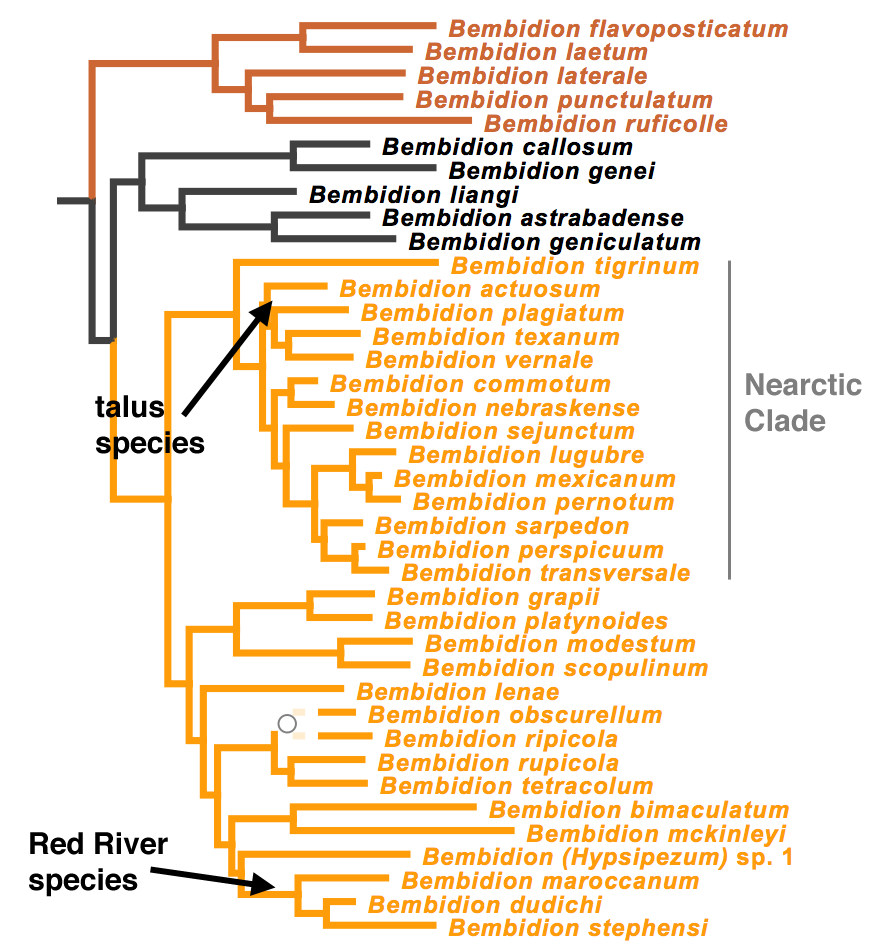
Ocydromus Series mod

While I am ever-so-slightly disappointed that these two new species aren’t the harbingers of a previously unknown radiation in North America, I am still very pleased by the discovery of new members of both the Nearctic Clade and a predominately Old-World radiation.  And, perhaps they are the harbingers of two previously unknown radiations!
Posted in Revising Bembidiina | Tagged , , , , | Leave a comment

A new lineage of Bembidion?

On my recent field trip around the west, something occurred that has never happened to me before in North America:  I knew, in the field, that I had found a previously undiscovered species.  This has happened to me in South America (where more of the fauna is undescribed), but not here.  I’ve described a number of new species from North America, and know of many yet to be described, but the realization that those species were undescribed occurred in the lab, after examination under a good microscope, or by using DNA sequences.   On this recent trip I experienced the excitement of discovery twice while still in the field.

Continue reading

Posted in Fieldwork, Revising Bembidiina, Taxonomic Process | Tagged , , , , | 9 Comments

BLT

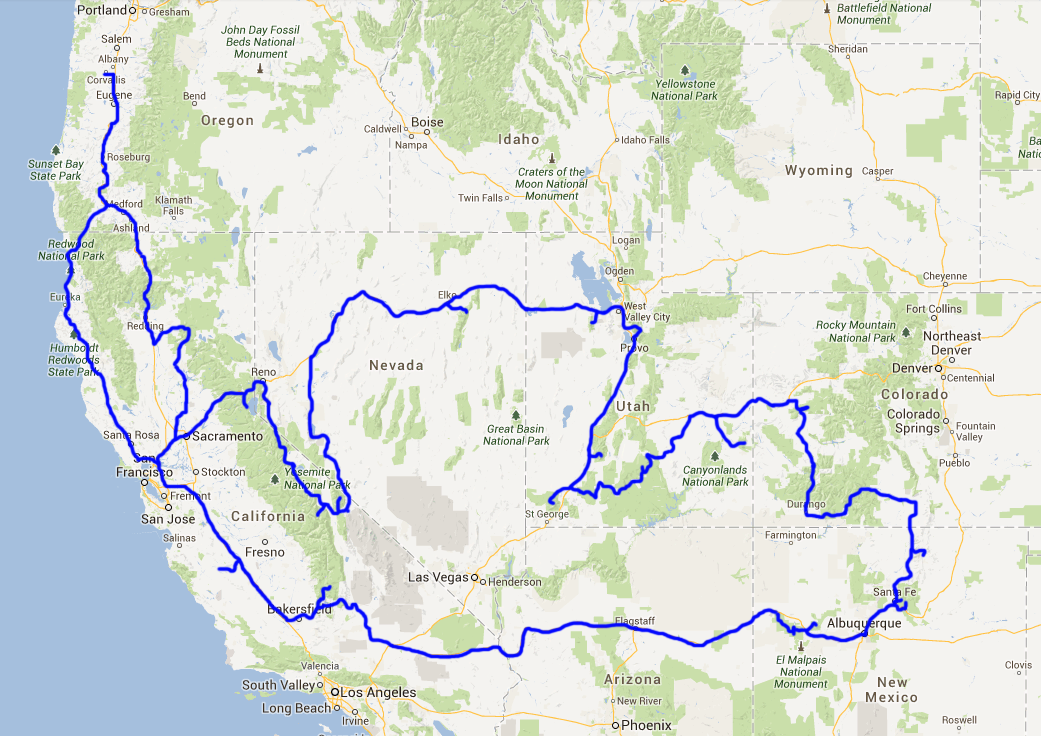
Our recent field work around the western USA, dubbed “The Big Loop Trip”, covered about 6165 miles (9922 kilometers) and almost one month.  My graduate student John Sproul was with me for the entire trip; my former postdoc (now UC Berkeley Prof) Kip Will joined us for the portion of the trip from the Bay Area east to New Mexico and back to the Bay Area (about 4800 miles).  Here is our route:

Big Loop Trip 2013

Big Loop Trip 2013

My next few posts will be about some of our adventures and discoveries.

Posted in Fieldwork, Revising Bembidiina, Taxonomic Process | 4 Comments

There and back again

We made it back to Corvallis a few hours ago, after having logged 6165 miles (9922 km) on the road trip.   Herbert (“El Tigre”) was very glad to arrive in Corvallis, as he noted that it is much moister than the arid slopes of Mount Taylor in New Mexico from whence he came.

From the dashboard, Herbert watches the rain in Corvallis.

From the dashboard, Herbert watches the rain in Corvallis.

It was a fantastic trip, with much learned about the diversity of Bembidiina in New Mexico, Colorado, and Utah.  I’ll write more soon about what we learned, and our travels.

Posted in Fieldwork, Revising Bembidiina | Leave a comment

On the Road

I’m now in Moab, Utah, on day 16 of a long field trip. On 26 May my graduate student John and I drove south from Corvallis, Oregon, collecting our way down to Concord, California, where we met up with my former postdoc, and current UC Berkeley prof, Kip Will.  The three of us then began a three-week-long field trip to hunt for carabid beetles.

The purpose of this trip for me is to collect beetles for my project on Bembidiina of North America; John and I are preserving beetles we find for DNA and morphological studies to help discover and document the species of this group in the United States and Canada.  Kip is hunting for a different group of carabid beetles, members of the subgenus Hypherpes of genus Pterostichus, in order to document that group in the southern mountains east of California.

We set off from Concord on 28 May, heading south to near Lake Isabella, CA, in Kip’s great field vehicle, a Ford Raptor.  Here are Kip and John in front of the truck – Kip is looking at beetles, and John is looking cool.   Continue reading

Posted in Fieldwork, Revising Bembidiina | 5 Comments

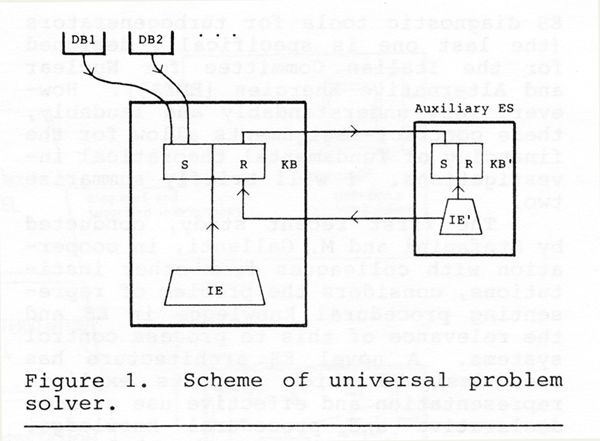
Universal Problem Solver

I want one of these.

universalProblemSolver

From an article by Paul Roman, “Artificial Intelligence at Milan”, in the April 1986 issue of European Science Notes published by the U.S. Office of Naval Research.

Posted in fun stuff, Scientific Illustrations | Leave a comment

Off into the wilds!

Kip Will, John Sproul, and I are about to embark on a 3-week trip from the Bay Area to New Mexico, Colorado, Utah, and Nevada.  If you want to see pictures of the trip, check out my Instagram feed (@bembidion).  (I’m new to Instagram, so if that isn’t the right way to refer to that, please post a comment!)


Posted in Fieldwork, Revising Bembidiina | Leave a comment

My Worst Collecting Trip EVER

Thirty years ago today, on 19 May 1983, I embarked on an extraordinarily ill-fated collecting trip with Jim O’Hara, fellow graduate student at the U of Alberta in Edmonton.  It is perhaps most memorable for the discovery of a body.  In the space of less than two days the expedition packed in a lot of misery.

It started out promisingly enough, as we drove in Jim’s van east to the North Saskatchewan River near Maidstone, Saskatchewan, in particular to the Paynton Ferry crossing.  The primary goal was to acquire adult females of the rare beetle species Bembidion balli, so that I could raise larvae from them.  I had collected Bembidion balli from that site the fall before, so I was very hopeful.

Bembidion balli

Bembidion balli

Continue reading

Posted in Fieldwork | 2 Comments

Follow-up to “What should I name this beetle?”

In my post “What should I name this beetle?”, I discussed a pretty, spotted beetle species that lives in the Sierra Nevadas of California and which lacks a name.

I’ve recently been in discussion with Don Cameron,  an arachnologist and friend of my brother Wayne. Don is a scholar of Greek and Latin, and has been tremendously helpful in my search for a name.   Here are the options he suggested that I like the best:

Bembidion oreoastron, from the Greek “oreos” (= “mountain”, genitive singular) and “astron” (= “star”, neuter noun).  Thus, oreoastron is “mountain star”.

Bembidion orolampron, from the Greek “oros” (=”mountain”, nominative neuter), and lampron (= “gleaming”).  Thus, orolampron is “mountain gleaming”.

I’m strongly leaning toward Bembidion oreoastron.  I’ll sleep on it a few days, and decide.

What do you folks think?

Posted in Taxonomic Process | Tagged , , | 3 Comments

The Bembidion ulkei mystery: solved

In an earlier post, I discussed the mystery of Bembidion ulkei.  Here’s a quick summary:  according to Lindroth’s (1963) study, Bembidion obscuripenne is a widespread species in the west,  from California north to Washington. In contrast, Lindroth knew B. ulkei only  from the type series of five specimens labelled “Nevada”. However, every single male that I have examined from Nevada, California, Oregon, and Washington has male genitalia that match Lindroth’s drawing of the male genitalia of B. ulkei, and none match B. obscuripenne.  Lindroth’s drawing of B. obscuripenne is of a male from Dallas, Oregon, in the coastal range, and I have not seen any specimens of this group from the coastal range.  There seemed to be only two viable explanations for these observations:  either (1) B. obscuripenne is a rare species restricted to the Coast Range of Oregon, and B. ulkei is the widespread species, or (2) Lindroth mislabelled the figures in his publication.

I have borrowed the holotype specimens of B. obscuripenne and B. ulkei, and today I know the answer.   Continue reading

Posted in Revising Bembidiina, Taxonomic Process | Tagged , , | Leave a comment